Can Bitcoin Miners Become Part Of The Payment Stack?
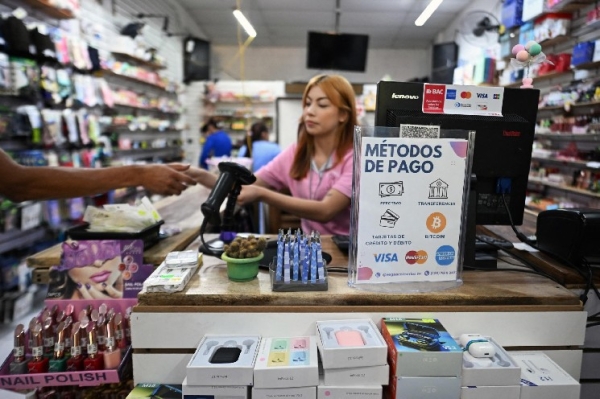
Bitcoin began as peer-to-peer electronic cash, but the market gave it a different job. Over the past decade, Bitcoin has become crypto’s benchmark investment asset: something to accumulate, custody, borrow against, and measure against. Stablecoins, meanwhile, became the industry’s practical payment rail.
That split made sense. Bitcoin’s volatility, confirmation times, and tax complexity made it awkward for everyday spending, while stablecoins offered the thing merchants and users actually needed: a familiar unit of account that could move quickly across digital rails. Bitcoin became the asset people did not want to spend. Stablecoins became the money they could.
The gap is becoming more visible as stablecoins move deeper into mainstream payment infrastructure. Visa said its stablecoin settlement pilot now supports nine blockchains and had reached a $7 billion annualized settlement run rate as of March 2026. That does not mean stablecoins have solved every payments problem, but it does show which part of crypto is being absorbed most quickly into commercial finance.
Bitcoin is now facing the opposite question. It does not need to prove that it can be held. It needs to prove that it can move in ways that create useful economic activity. More specifically, it raises a question for the companies that secure the network: can miners evolve from passive validators into active participants in Bitcoin’s payment economy?
For most of Bitcoin’s history, miners have had a narrow but essential role: secure the network, validate transactions, and earn block rewards plus transaction fees. Yet block rewards decline with each halving, which means Bitcoin’s long-term economics increasingly depend on whether transaction activity can become a more meaningful source of revenue. That transition is still far from complete. Hashrate Index reported that during the week of July 13, 2026, miners collected roughly 2,914 $BTC in block rewards, while transaction fees accounted for only 20 $BTC, or 0.69% of block rewards.
That is the opening for a new kind of mining question. If miners can help facilitate payment activity, not just secure final settlement, they may open a revenue model that complements block rewards and transaction fees while pushing Bitcoin closer to its original payment vision.
Stablecoins Won The First Crypto Payments Cycle
The reason stablecoins became crypto’s payment layer is not hard to understand. They removed the hardest part of spending crypto: price uncertainty. A user sending dollars on-chain does not have to worry that tomorrow’s price will make today’s purchase look expensive. A merchant receiving dollar-equivalent value does not have to become a crypto treasury manager.
Bitcoin payments never had that luxury. The stronger Bitcoin’s investment narrative became, the harder it was to frame spending as rational consumer behavior. For many holders, paying with Bitcoin still feels less like using money and more like selling an appreciating asset.
That does not mean Bitcoin payments disappeared. It means they moved into infrastructure debates: Lightning channels, custodial wallets, merchant processors, fiat conversion, and now potentially miner-linked payment models. The market is no longer waiting for Bitcoin holders to suddenly behave like debit-card users. It is trying to make Bitcoin spendable without making the user experience feel like a raw blockchain transaction.
Coins.ph offers a recent example of that approach. The company expanded its QRPh crypto payment functionality to include Bitcoin and Ethereum, allowing users to spend crypto at an estimated 700,000 QRPh-enabled merchants in the Philippines, with crypto converted into Philippine pesos at checkout.
That matters because it does not ask merchants to price goods in Bitcoin or manage crypto settlement risk. It lets users spend from crypto balances through a familiar domestic payment framework.
Wei Zhou, CEO of Coins.ph, said user behavior suggests consumers “value the flexibility and wealth potential of holding assets like Bitcoin,” but prefer spending crypto through “familiar local payment rails like QRPh” rather than dealing with raw crypto transactions. He added that stablecoins have been the primary token used since Coins.ph introduced QRPh crypto payments, followed closely by Bitcoin, despite Bitcoin being added later.
That is the useful lesson. Bitcoin may re-enter payments not by replacing local currency at checkout, but by becoming one balance users can spend through systems they already understand.
The Miner Incentive Is Different
If Bitcoin payments grow, the most obvious beneficiaries are wallets, processors, and exchanges. But miners have a deeper structural reason to care.
Miners are paid to secure Bitcoin, but the long-term design of Bitcoin assumes that transaction fees become more important over time as newly issued Bitcoin declines. That creates a quiet tension. Bitcoin holders are often incentivized to hold, while miners ultimately benefit from activity.
This is where payment infrastructure becomes relevant to mining economics. If miners remain purely passive validators, they simply wait for transaction demand to appear. But if miners can help create, route, prioritize, or commercially support payment activity, they move closer to the transaction economy itself.
That is the broader significance of GoMining’s GoBTC Pay. According to the company’s launch announcement, GoMining introduced GoBTC Pay, a Bitcoin payment protocol that uses its own mining pool to prioritize transaction confirmation and targets 12-hour final on-chain settlement by the end of 2026. Because this is a company press release, those details should be treated as GoMining’s stated product roadmap rather than independent evidence of market adoption.
The product itself is less important than the model it represents. It treats mining capacity as part of the payment experience, not just a background security function.
Boy George, CEO of GoMining, framed the shift as miners becoming “no longer limited to monetizing security alone.” By participating in payment infrastructure, he said, miners can take part more directly in “commercial activity taking place on the network.”
That is the central market-structure question. If Bitcoin payments become a real economic layer, miners may not only collect fees after transactions arrive. They may help shape the infrastructure that causes more transactions to happen.
A New Revenue Layer, Or A New Control Surface?
The opportunity is clear. A miner-linked payments model could give miners exposure to transaction volume in a way that is more predictable than waiting for episodic fee spikes. GoMining says that with GoBTC Pay, 0.1% of each transaction’s value is allocated to miners in its pool for settling the transaction on the network.
That kind of model points toward a broader possibility: miners earning from payment activity as a service layer, not only from block rewards and standard transaction fees. In traditional payments, networks and processors monetize volume. Bitcoin has historically separated network security from the consumer payment experience. Miner-led payment models begin to blur that line.
The risk is equally obvious. Bitcoin’s credibility comes from open participation and neutral settlement. If reliable payment flows depend on a small number of large miners or dedicated pools, Bitcoin payments could become faster and more commercial, but also more dependent on specific infrastructure providers.
That tradeoff matters because Bitcoin’s existing payment infrastructure has largely developed through service layers such as Lightning, custodial wallets, payment processors, and exchange-linked merchant tools. Those systems already show that usability usually requires abstraction. The question is whether miner involvement adds a useful economic layer or creates another point of dependency around settlement.
George acknowledged the concentration risk in principle, saying the goal “should not be to concentrate payment activity around a small group of miners,” but to create incentives for broader participation across the ecosystem.
That is the design challenge. The strongest version of miner-led payments would expand miner participation and improve Bitcoin’s commercial usefulness. The weakest version would simply create another privileged gateway, this time attached to block production.
Bitcoin Payments May Return Through Abstraction
The mistake is assuming Bitcoin payments have to return in their original form to matter. A purist vision would have users spending Bitcoin directly, merchants holding Bitcoin, and the transaction settling natively with minimal intermediation. That remains philosophically clean, but commercially limited.
The more likely path is layered. Consumers spend from crypto balances. Merchants receive local currency. Payment providers manage conversion and compliance. Lightning or other infrastructure handles speed where appropriate. Miners, in some models, help connect settlement activity to mining economics.
Zhou’s view reflects that practical direction. For Bitcoin to become a payment asset again, he said the ecosystem must abstract volatility for merchants through “instantaneous, low-fee Layer-2 scaling networks and automated, real-time fiat conversion at checkout.” He also connected the miner question directly to Bitcoin’s payment future, arguing that miners can become “active payment facilitators and liquidity providers” as block rewards diminish.
That does not mean Bitcoin will displace stablecoins in payments. Stablecoins still have the clearer product-market fit for everyday settlement because they match how consumers and merchants account for value. But Bitcoin has something stablecoins do not: the deepest brand, liquidity, and security profile in crypto.
The question is whether that can be converted into payment utility without breaking the investment narrative that made Bitcoin valuable in the first place.
For miners, this is not nostalgia for Satoshi’s white paper. It is a business model question. If Bitcoin remains mostly dormant monetary property, miners remain tied to block rewards, transaction fees, treasury strategy, power markets, and adjacent infrastructure plays. If Bitcoin payment activity grows, miners may have a path to participate in a wider commercial economy built around the network they secure.
The next phase of Bitcoin payments may therefore look less like a consumer revolution and more like an infrastructure realignment. Stablecoins have already shown that crypto payments work best when users do not have to think about the underlying rails. Bitcoin may need the same lesson.
If miners become part of that stack, their role in Bitcoin changes. They are no longer only securing the ledger. They are helping create the economic activity the ledger is meant to record.