Biggest crypto heist in history: How Binance’s $6 billion hack rattled markets and what it means for investors?
Synopsis
Binance is investigating a reported security breach estimated to have caused $6.3 billion in losses, with North Korea-linked hackers suspected by TRM Labs. The exchange says user funds are safe and has pledged to cover all losses.
The world’s largest cryptocurrency exchange, Binance, has faced what appears to be the biggest crypto heist in history, with the total impact of the security breach being estimated to be more than $6 billion, rattling the crypto markets and spooking investors across the globe.
Binance on Thursday said it is investigating reports of a potential security breach, while its founder said the incident “does look like a hack on Binance.” In a post on X, Binance announced that its initial investigation found that the incident may have arisen from a hacked laptop of a DevOps engineer, which allowed an attacker to gain access to a service container and submit unauthorised withdrawal transactions.
Binance’s initial investigation suggests that the security incident may involve a compromised DevOps engineer’s laptop, which allowed an attacker to gain access to a service container and submit unauthorized withdrawal transactions. We have found no evidence of any wallet private key leak. We will share a detailed technical post-mortem once the investigation is complete and the facts are fully verified.The estimated total impact sits at around $6.3B. We have worked with blockchain partners to freeze affected assets, with ~$3 billion frozen on-chain so far.Binance will cover all losses from the SAFU fund and the company’s funds. User funds are safe. We will also publish an updated Proof of Reserves once the remediation is complete.As an immediate precaution, Binance has:- temporarily suspended deposits and withdrawals while security checks are completed;- revoked the affected address authorisation;- engaged law enforcement and blockchain intelligence partners to trace and recover funds.Our teams are working around the clock to resolve this issue safely and thoroughly. We are working closely with our law enforcement partners to confirm the identity of these criminals and bring them to justice.Please rely only on official Binance channels for updates. Please feel free to contact Binance Customer Support if you have any further questions.https://t.co/ywB2mKFy0p
— Binance (@binance) October 30, 2026
Is North Korea behind Binance’s security breach?
US blockchain analysis firm TRM Labs meanwhile said that North Korean hackers may be behind a $6.3 billion security hack on Binance. “An attacker moved approximately $6.36 billion out of Binance wallets on ten blockchains, most of it in about 20 minutes,” TRM Labs said in a blog post on its website.
Crypto TrackerTOP COINS (₹) Tether95 (-0.14%)Bitcoin7,460,908 (-2.03%)XRP120 (-2.47%)Ethereum213,488 (-3.04%)BNB67,963 (-5.02%)”TRM attributes the attack to TraderTraitor, North Korea’s elite hacking unit, based on robust on- and off-chain intelligence. We make this judgment with high confidence,” it further said. The FBI had named TraderTraitor as responsible for the $1.5 billion Bybit hack in February 2025.
TRM said several features of the latest hack on Binance match the earlier North Korea-linked heists, including the Bybit hack and the KelpDAO hack in April 2026. This includes small Tornado Cash withdrawals funding an operator wallet, staging that began well before the theft, and signatures obtained in advance, then executed in one burst.

Live Events
Also read | Blockchain analysis firm TRM says North Korea behind Binance crypto theft
How will investors be impacted?
After the massive security breach, around $3 billion in cryptocurrency assets froze, and Binance pledged to cover all losses. It also temporarily suspended deposits and withdrawals, revoked the affected address authorisation, and enlisted law enforcement and blockchain intelligence firms to trace and recover funds.
“We have found no evidence of any wallet private key leak. We will share a detailed technical post-mortem once the investigation is complete and the facts are fully verified,” Binance said. Several cryptocurrency firms, including stablecoin issuers Circle and Tether, froze a combined $2.54 billion in funds linked to the suspected incident on Thursday.
Binance co-founder Yi He said customers’ deposits remain unaffected and continue to operate as normal. “Our team is currently working on enhancements to the withdrawal service and related address controls. We expect to begin resuming withdrawal services in the next 48 hours,” she added.
**Service Update**Deposits remain unaffected and continue to operate as normal.Our team is currently working on enhancements to the withdrawal service and related address controls. We expect to begin resume withdrawal services in the next 48 hours.We will continue to share updates through official Binance channels as progress is made.
— Yi He (@heyibinance) October 30, 2026
Binance said it would cover all losses using its Secure Asset Fund for Users and company funds, adding that customer funds are safe. “We have found no evidence of any wallet private key leak. We will share a detailed technical post-mortem once the investigation is complete and the facts are fully verified,” it added.
Binance security hack rattles crypto markets
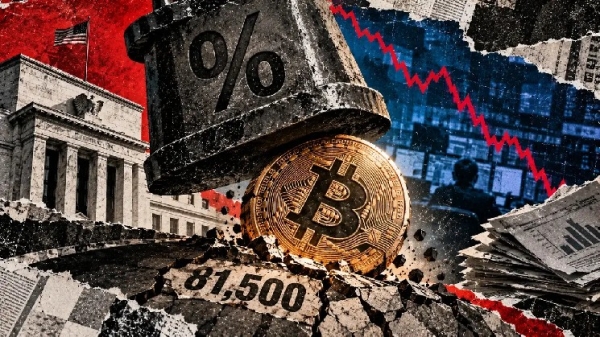
As a result of the security breach at the world’s largest crypto exchange, Bitcoin dropped 3% to hit a six-week low below $76,500. Ether fell over 3% to trade near $2,185.
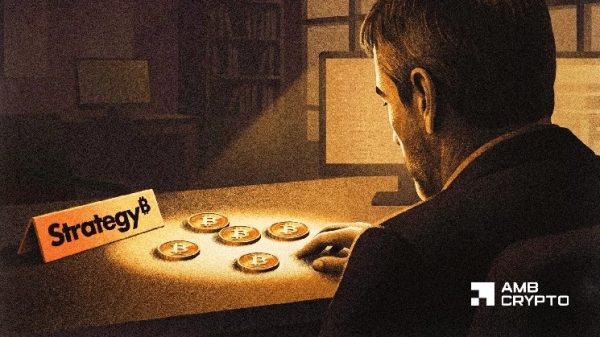
Shares of crypto exchange Coinbase Global dropped 5% while those of bitcoin buyer Strategy fell nearly 6% in extended US trading.
Also read | Binance flags ‘potential security issue,’ says approximately $6.3 billion impacted
(With inputs from agencies)
Disclaimer: This article has been written by Debaroti Adhikary, who is not a SEBI-registered Research Analyst or an Investment Adviser. Debaroti Adhikary and his/her ‘relative(s)’ (as defined under Section 2(77) of the Companies Act, 2013) do not hold any financial interest in the companies mentioned in this article as of the date of publication. The views/recommendations mentioned in this article, wherever applicable, are those of the respective SEBI-registered Research Analyst/brokerage and have been reproduced/reported with due attribution. They should not be construed as the views or recommendations of The Economic Times Digital or the journalist. Readers are advised to consider the original research report and make their investment decisions based on their own assessment. Brokerage disclaimers here.
Source