Strategy buys another 456 Bitcoin, lifting total holdings to 851,305

Strategy has bought another 456 Bitcoin. The company’s total holdings now stand at 851,305 $BTC.
The new tranche follows a purchase Strategy disclosed in a November 16, 2026 SEC Form 8-K filing. In that filing, the company reported buying 485 $BTC between November 9 and November 15.
That earlier buy cost approximately $33.4 million, at an average price of $68,887 per coin. It brought Strategy’s total to 850,849 $BTC.

Know when your
coins move
Alerts, real-time prices, and market news — all in one app  Point your phone camera to install
 4.8 based on 40K reviews in the App Store and Google Play


As of that November filing, Strategy had spent about $64.2 billion building its position. Its average acquisition cost was $75,452 per Bitcoin.
Compare that average cost with the $68,887 the company paid in the week ending November 15. Strategy was buying below its own break-even line.
Paper losses and creative funding
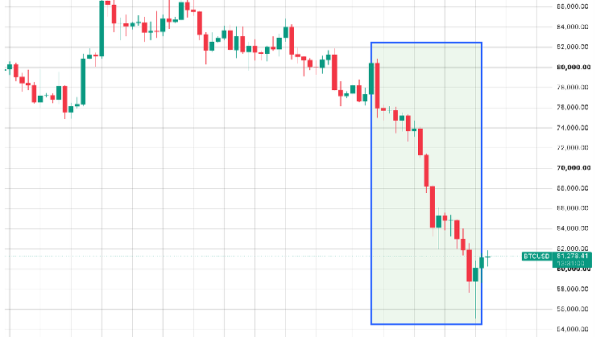
The price decline has left Strategy’s holdings underwater. Estimates put the unrealized loss at between $9.6 billion and $12 billion as of mid-to-late November 2026.
That works out to roughly 15% to 19% below the company’s cost basis.
The funding mechanics behind the prior week’s purchase were arguably more interesting than the Bitcoin itself. Strategy raised approximately $244.7 million by selling its Class A common stock, which trades under the ticker MSTR.
That money did two jobs. It paid for the Bitcoin, and it also let the company repurchase $228.1 million worth of its STRC preferred shares.
Strategy also reported holding approximately $4.9 billion in USD-denominated assets alongside its Bitcoin.
The Saylor playbook
Executive Chairman Michael Saylor has long pitched Bitcoin as a long-term store of value. He reiterated that commitment alongside the latest disclosures.
What this means
For investors, the central question is less about this purchase and more about the funding model. Strategy’s ability to keep buying depends on its ability to keep selling stock to the market.
Selling common shares to fund Bitcoin purchases and preferred buybacks can dilute existing common shareholders.
The preferred share repurchases deserve a closer look. Buying back STRC reduces obligations tied to those securities, which could ease some pressure on the balance sheet over time.
That suggests management is weighing balance sheet health alongside accumulation. A company focused only on maximizing its coin count would presumably have pointed all $244.7 million at Bitcoin.
With Strategy’s average cost at $75,452, a sustained move above that level would erase the paper loss. A further slide would deepen it.
The $4.9 billion in dollar-denominated assets provides some cushion. It gives Strategy flexibility to meet obligations without being forced to sell Bitcoin into a falling market.
What to watch next: the size and funding source of upcoming weekly purchases, any further preferred share buybacks, and how the gap between Bitcoin’s price and Strategy’s $75,452 cost basis evolves.